
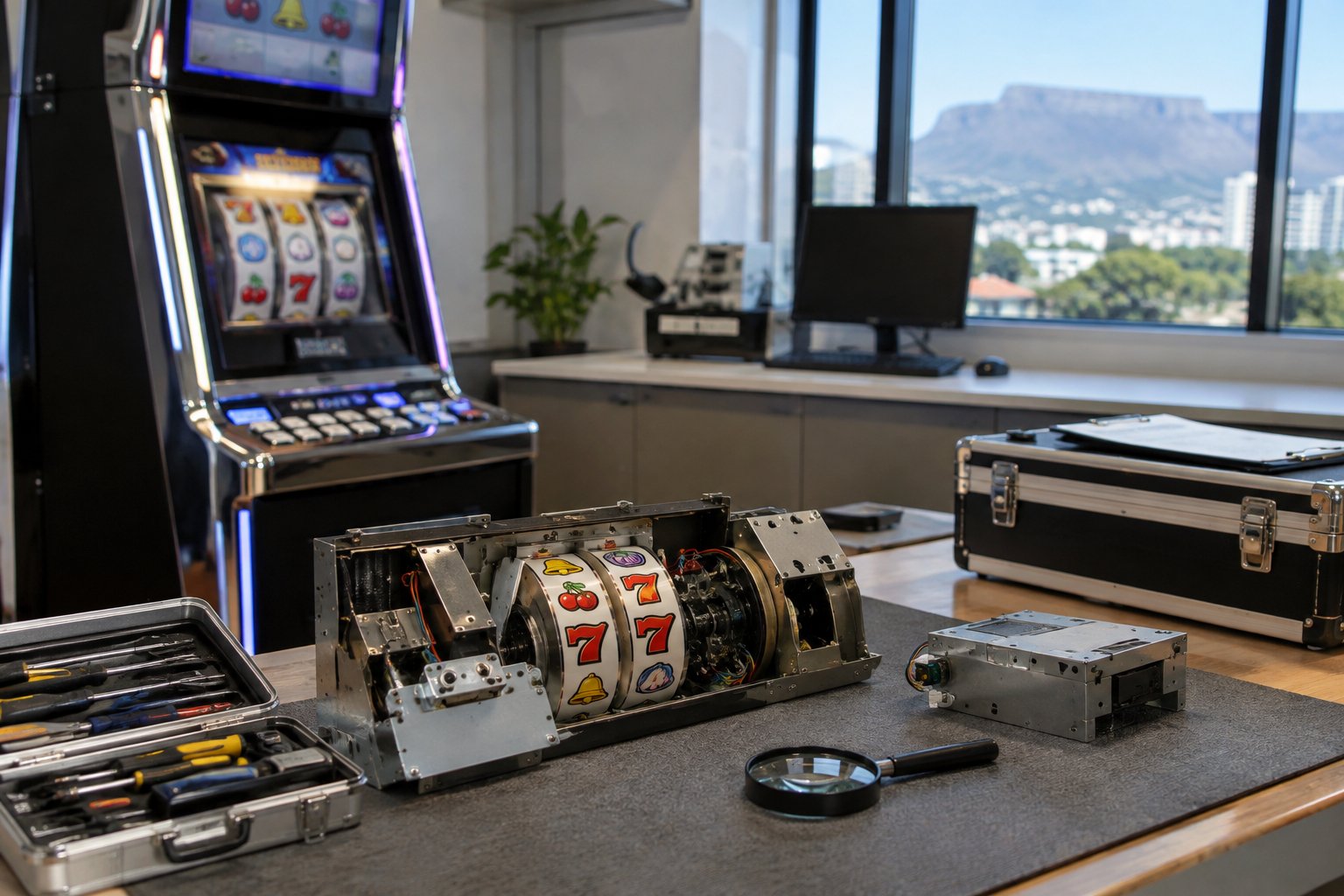
Casino oversight covers SANS 1718 standards, laboratory testing, surveillance, electronic monitoring, software checks, cashier security and player disputes.
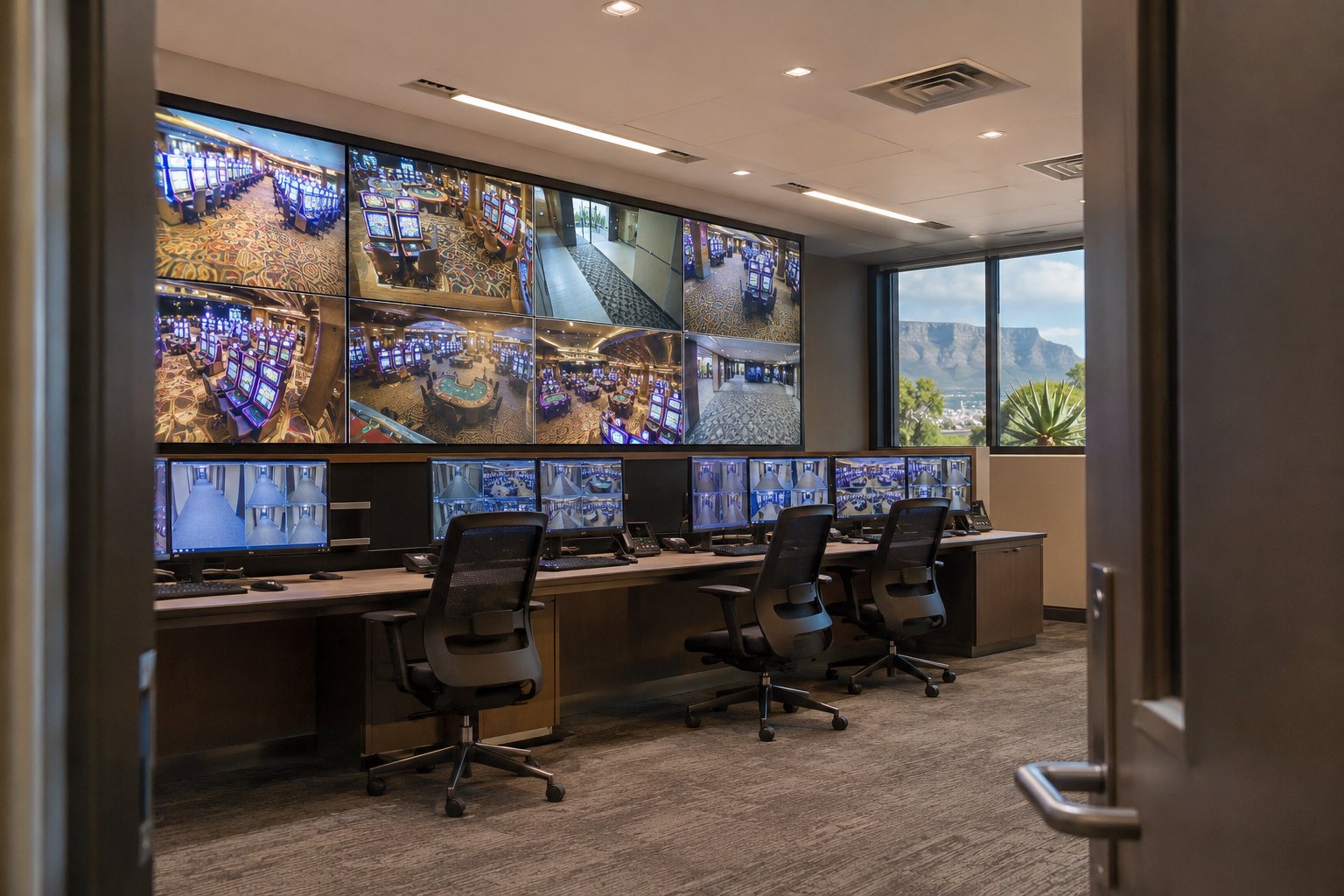
The Four Pillars of Gaming Integrity
The four areas are accredited testing, CEMS telemetry, cryptographic checks and CCTV.
The Four Pillars of South African Gaming Integrity
Below is the statutory framework governing game fairness, physical surveillance, and electronic auditing across South Africa:
| Integrity Pillar | Technical Standard & Lab | Regulatory Authority | Consumer Protection Impact |
|---|---|---|---|
| 1. SANS 1718 Standards Hardware & Software Spec |
SANS 1718 Series GLI Africa & BMM Testlabs |
NRCS & Provincial Boards | Guarantees pseudo-random number generator (PRNG) mathematical randomness |
| 2. CEMS Telemetry Real-Time Electronic Link |
Central Electronic Monitoring Direct regulatory feed |
National Gambling Board (NGB) | Monitors meters, coin-in, and jackpot hits 24/7 to prevent tax or payout fraud |
| 3. Cryptographic Hashes EPROM Firmware Security |
SHA-256 / MD5 Signatures Tamper-evident seals |
Provincial Inspectors | Ensures machine software cannot be modified or hacked on the floor |
| 4. Digital CCTV Panopticon Uncompressed 4K Video |
30 to 90-Day Retention Minimum 25–30 fps |
PLA Surveillance Directors | Preserves complete video audit trail of every card, dice, and cage transaction |
Laboratory Certification & Random Number Generator (PRNG) Auditing
At the heart of every modern electronic slot machine is a Pseudo-Random Number Generator (PRNG). To comply with SANS 1718-1, gaming software submitted to GLI Africa undergoes mathematical testing:
- Marsaglia Diehard Battery of Tests: Evaluates PRNG output across 15 separate mathematical randomness benchmarks, including Birthday Spacings, Overlapping Permutations, and Binary Rank tests.
- Chi-Square Distribution Analysis: Tests symbol distribution over more than 100 million simulated spins to verify that no reel stop or bonus trigger exhibits statistical bias or clustering.
- Source Code Inspection: software engineers analyze source code to verify that no hidden backdoors, diagnostic cheats, or unauthorized payout alteration routines exist.
How slot software is checked
How does a player know a slot machine is genuinely fair? In South Africa, the process is mathematically verifiable:
- Laboratory Benchmark: Before a game build is approved, testing laboratories compile the software and generate a unique cryptographic digital fingerprint (SHA-256 hash). This benchmark hash is permanently registered with the National Regulator for Compulsory Specifications (NRCS).
- Hardware Sealing: The physical logic board is housed inside a locked, tamper-evident security cage within the slot cabinet, secured with serialized tamper-evident tape registered in the provincial board's database.
- Routine Field Spot Audits: Provincial compliance inspectors perform unannounced spot audits. Using handheld validation devices, inspectors read the memory chips and compare the live SHA-256 hash against the NRCS benchmark. If a single character fails to match, the machine is immediately seized and shut down.
Surveillance and cashier security
South Africa enforces technical surveillance requirements:
- Full Table & Cage Coverage: Pan-Tilt-Zoom (PTZ) 4K cameras cover every roulette wheel, card shoe, chip tray, drop box, and cashier window with zero blind spots.
- Cashier Cage Fortification: Cashier cages are constructed with Level 3 bullet-resistant glazing, double-door mantrap airlocks, seismic vibration sensors, and dual-custody time-delay safe locks.
- Tamper-Proof Storage Vaults: Digital video recordings must be archived in biometric-access server rooms for a minimum of 30 to 90 consecutive days. Disputed incident footage must be preserved permanently until legal proceedings conclude.
Frequently Asked Questions: Fair Play & Security
What is SANS 1718 and why is it important?
SANS 1718 is the national technical standard formulated by the South African Bureau of Standards (SABS). It prescribes compulsory technical specifications for gaming machines, monitoring systems, and random number generators to ensure game fairness.
Can a casino refuse to show me surveillance footage of a dispute?
Under provincial gaming board regulations, patrons cannot view live surveillance rooms directly due to proprietary security layouts. However, the footage must be reviewed by the board inspector, who provides a formal written finding to the patron.
How long is digital surveillance footage saved?
Provincial regulations require casinos to retain all uncompressed digital camera recordings for a minimum of 30 to 90 consecutive days. Any footage relating to an unresolved patron dispute is archived indefinitely.
What does GLI Africa do in South Africa?
Gaming Laboratories International (GLI) Africa operates an accredited accredited test facility in Midrand. It conducts rigorous mathematical, electronic, and source code evaluations on gaming devices before they are certified for public play.
What happens if a slot machine malfunctions during a spin?
The statutory rule "Malfunction voids all pays and plays" applies. The machine locks its electronic RAM memory, and technicians verify the event against CEMS data. If an unfair void occurs, the player can escalate to the provincial gambling board.